|
2
min read
|
Varun Aggarwal
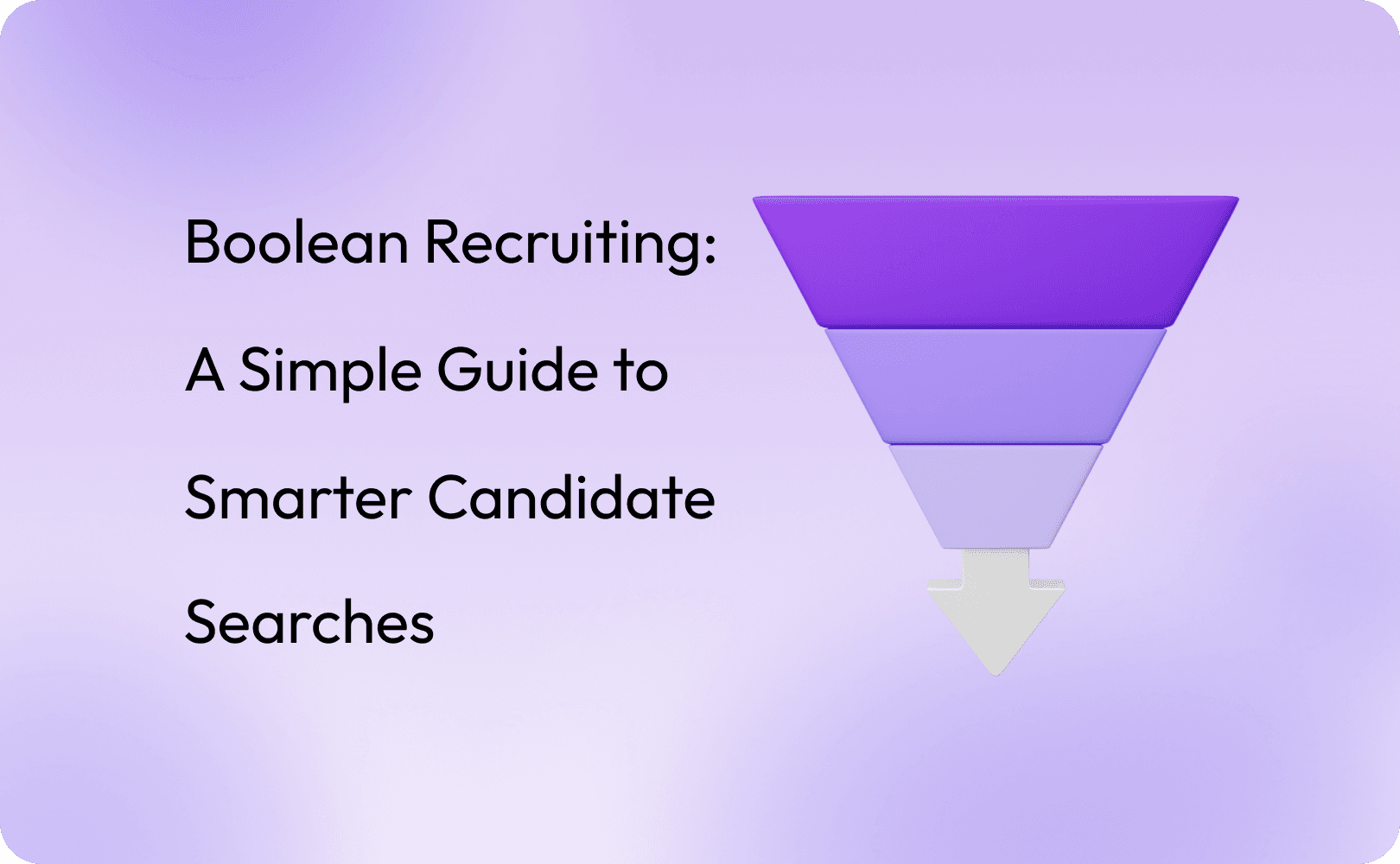
Recruiting often means sorting through hundreds of profiles before finding one that fits. Boolean recruiting exists to make that process faster and more accurate. It lets recruiters control search results instead of relying only on platform algorithms.
If you’ve ever wished your search results were sharper, cleaner, and more relevant, learning Boolean is worth it.
What Is Boolean Recruiting?
Boolean recruiting is a method of building structured search queries using specific operators. These operators tell the search engine exactly what you want, what you are open to, and what you want to avoid.
Here are the main operators:
AND: must include both terms
OR: either term works
NOT or -: exclude specific terms
Quotation marks (" "): search exact phrases
Parentheses ( ): group conditions
A simple example:
Java AND "Spring Boot"
This means: show candidates with both Java and Spring Boot.
A broader version:
(Java OR "Java Developer") AND "Spring Boot" AND Microservices
Now you get variations of the title, but still keep the required skills.
How Boolean Search Works in Practice
Boolean helps you customize your search based on what matters most.
Here are three practical formats recruiters use:
Role + Required Skills
Example:
"Product Manager" AND Agile AND JiraRole + Skill Alternatives
Example:
("Frontend Developer" OR React OR Vue OR Angular) AND JavaScriptRole + Filters to Remove Irrelevant Matches
Example:
"Data Scientist" AND Python AND TensorFlow NOT Intern NOT Fresher
With every layer you add, your results become more relevant.
Common Mistakes and How to Avoid Them
Boolean is powerful, but small errors can change everything. Here are quick tips:
Always use quotation marks for full job titles.
Without quotes,"Data Engineer"becomes Data AND Engineer, which may show unrelated profiles.Avoid making the search too narrow.
"Java Developer" AND Kafka AND Kubernetes AND AWS AND Banking AND Cybersecuritymay return almost nothing.Start broad, then refine based on what appears.
Where You Can Use Boolean Searches
Most platforms support Boolean logic, including:
LinkedIn
Google (X-ray search like
site:linkedin.com/in "Data Analyst" Python)Job boards
Many ATS systems
GitHub and technical sourcing tools
Each platform may handle symbols slightly differently, so testing helps.
Boolean Is Useful, but Hiring Has Changed
Boolean helps recruiters find candidates faster, especially for niche roles. However, it has limits. It cannot measure real skills, context, impact, or potential. It only filters text.
Modern hiring now combines Boolean with AI matching, skill graphs, and automated screening. Instead of manually refining dozens of queries, AI can evaluate skill fit in seconds.
Boolean helps you search. AI helps you shortlist.
Final Thought
Boolean recruiting remains a skill worth learning. If you want more relevant search results and less noise, Boolean gives you control. Paired with modern AI tools, it becomes even more effective and helps you reach qualified talent faster.