|
3
min read
|
Saurabh Lodha
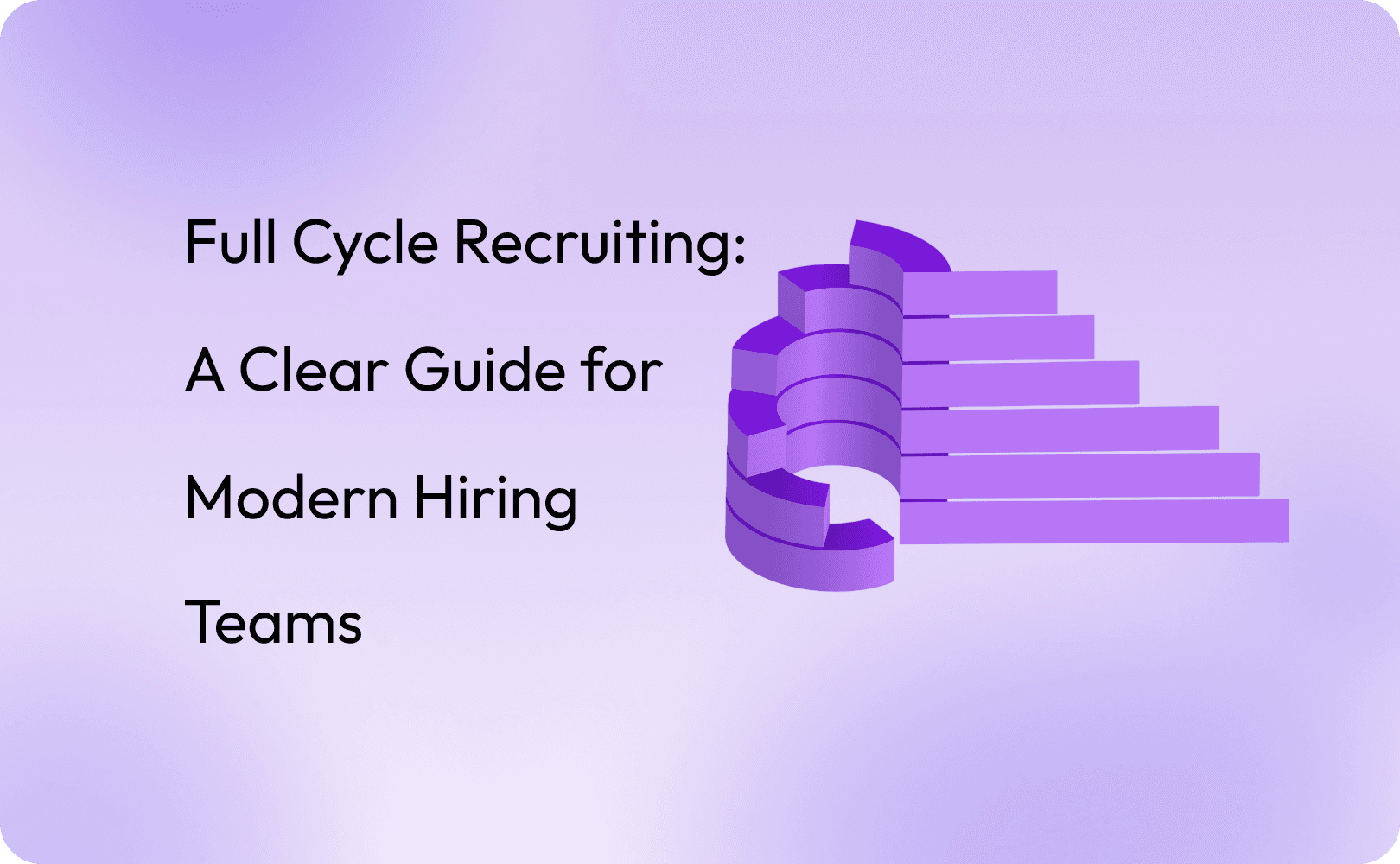
Recruiting isn’t just about finding talent. It’s about managing the entire journey from first interaction to offer acceptance. That complete process is called full cycle recruiting.
For teams looking to streamline hiring, reduce delays, and create a better experience for both candidates and hiring managers, understanding full cycle recruiting is essential.
What Is Full Cycle Recruiting?
Full cycle recruiting is the end-to-end hiring process handled by a single recruiter or a small recruiting team. Instead of separating sourcing, screening, interviewing, and onboarding into different roles, one person manages the entire hiring journey.
This approach is common in startups, fast-moving teams, and organizations that value ownership and personalized candidate experience.
The Six Stages of Full Cycle Recruiting
Full cycle recruiting typically includes six core stages:
Planning and Role Definition
The process begins by understanding the job requirements. This includes responsibilities, skills, experience level, salary range, and success criteria.Sourcing Candidates
The recruiter finds potential candidates through job boards, referrals, LinkedIn outreach, Boolean search, talent networks, and internal pipelines.Screening and Shortlisting
Applications are reviewed to ensure alignment with the role. Screening can include resume review, skills based assessments, and short phone interviews.Interviewing
Candidates who move forward participate in structured interviews. These may include technical rounds, hiring manager discussions, or culture fit conversations.Selection and Offer
The recruiter works with hiring managers to determine the best match. Once confirmed, an offer is created, shared, and negotiated if required.Onboarding
After acceptance, onboarding ensures the candidate transitions smoothly into the team with access, documentation, and role clarity.
Why Full Cycle Recruiting Matters
Full cycle recruiting creates consistency. When one recruiter manages the entire process, there’s better communication, better coordination, and less room for confusion.
Other advantages include:
Faster hiring decisions
A more personal candidate experience
Clear ownership and accountability
Better alignment with hiring managers
Challenges in Full Cycle Recruiting
While the model is effective, it also comes with pressure. A single recruiter handles multiple tasks, which can be overwhelming when hiring volume increases.
Some common challenges include:
Balancing sourcing and interviewing
Maintaining speed without losing quality
Keeping communication consistent at every step
This makes process automation, templates, and technology extremely valuable.
Who Typically Uses Full Cycle Recruiting?
Full cycle recruiting is ideal for:
Startups
Small and mid-sized companies
Teams hiring for specialized roles
Organizations with low to moderate hiring volume
Large enterprises often divide recruitment into separate functions because they handle high applicant volume.
The Future of Full Cycle Recruiting
Full cycle recruiting is becoming smarter and more efficient with automation, AI screening, and role-based matching tools. Instead of spending time on manual tasks, recruiters now focus more on conversations, candidate experience, and hiring strategy.
The core idea remains the same: one recruiter guiding a candidate from first contact to first day.
Final Note
Full cycle recruiting brings speed, clarity, and ownership to the hiring process. When supported by technology and structured workflows, it helps teams hire better talent faster while delivering a consistent and personalized candidate experience.