|
4
min read
|
Varun Aggarwal
Most technical talent isn't actively job hunting. They're employed, building things, and generally content where they are. Your challenge isn't that they ignore your outreach. It's that they need a compelling reason to even consider switching when switching wasn't on their radar.
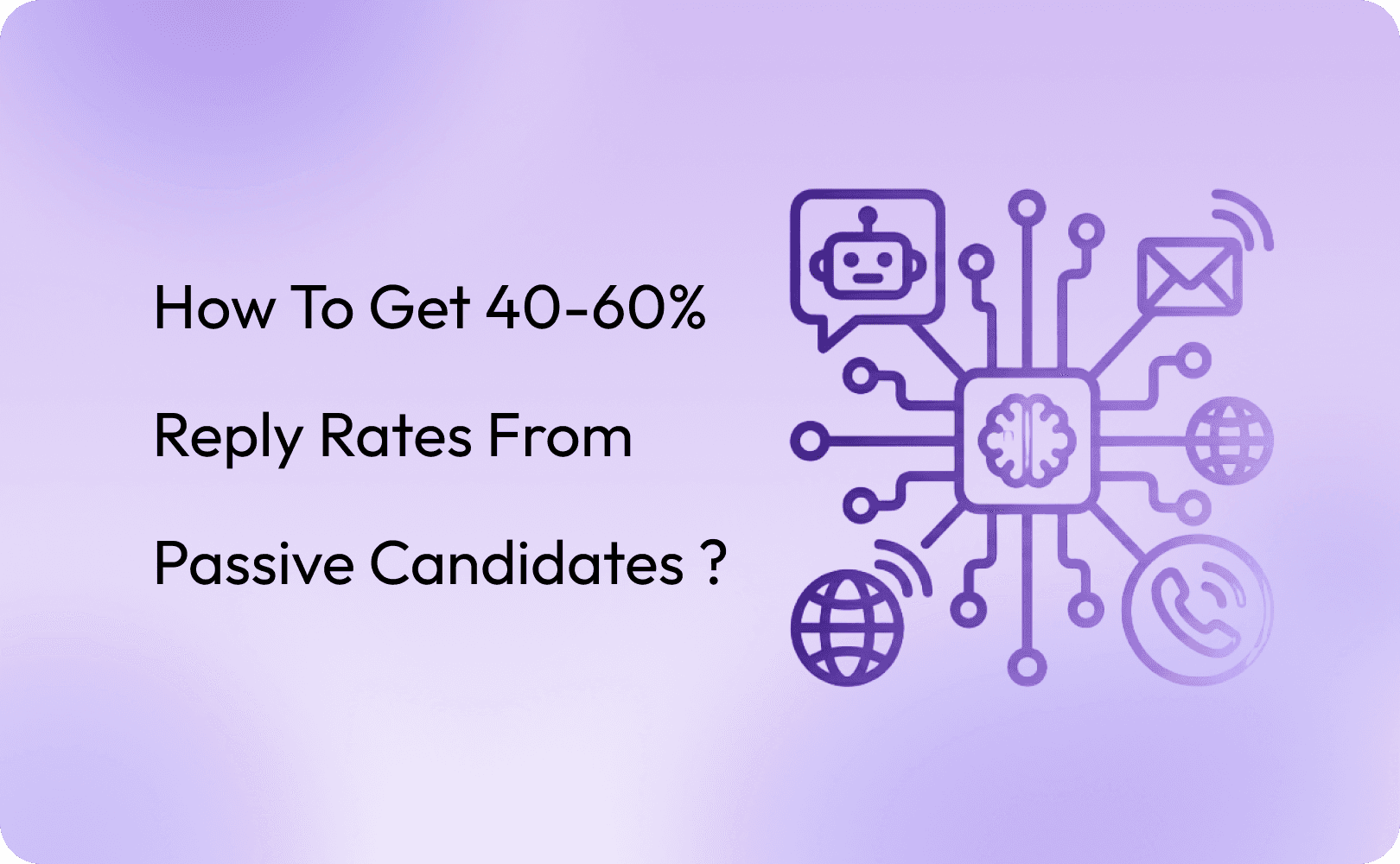
The difference between 10% reply rates and 40-60% reply rates comes down to how you approach these settled, not-looking candidates. Generic messages fail not because candidates are rude, but because there's nothing in the message worth responding to. Personalized, relevant outreach that shows you understand what they do and why this opportunity matters? That changes the equation entirely.
Here's what actually works in 2026.
Why Settled Candidates Need Different Outreach
When someone is actively job searching, almost any reasonable message gets a response. They want interviews. They're comparing options.
Passive candidates operate differently. They already have a job. For them to respond, your message needs to pass a higher bar: "Is this worth 15 minutes of my time to even explore?"
That bar gets cleared when your outreach demonstrates three things:
You know what they actually do, not just their job title
The opportunity is relevant to their specific work, not just any generic role
There's something concrete in it for them, not just "great company culture"
This is why spray-and-pray campaigns fail. You can't demonstrate those three things with a template that says "Hi [NAME], I saw your profile and think you'd be great for our Senior Engineer role."
Personalization at Scale
Here's the tension: you need to send 50-100 outreach messages per week to fill your pipeline, and each message needs to feel personally written. Manual personalization doesn't scale. Templates don't work.
The solution is automated personalization, not automated templates.
AI-powered outreach tools pull specific details from a candidate's background and weave them into contextually relevant messages. This isn't a mail merge. It's dynamic message construction based on actual signals: GitHub contributions, Stack Overflow answers, blog posts, LinkedIn activity, technologies they've worked with at scale.
A message that works looks like this:
"Hi Rahul, I came across your post about optimizing database query performance at high scale. We're dealing with similar challenges at [Company] with our real-time analytics pipeline. Your experience reducing query latency at [Previous Company] is exactly the kind of thinking we need. Would you be open to a brief conversation about what we're building?"
That message works because it references real work Rahul did, connects it to a specific problem, and makes the ask small. A conversation, not an application.
Message Structure That Works
Effective outreach for passive candidates follows a clear pattern:
Personalized hook (1-2 sentences). Reference something specific they did. Make it obvious you actually looked at their background.
Relevant connection (1-2 sentences). Explain why their background connects to what you're building. Be specific about the problem, not generic about "exciting opportunities."
Clear, low-friction ask (1 sentence). Don't ask them to apply. Don't send a job description. Ask for 15 minutes. Make it easy to say yes.
Multi-Channel Sequencing
Most recruiters send one LinkedIn message, get no response, and move on. That's leaving results on the table. People miss messages, forget to reply, or are just busy that week.
Effective passive candidate sourcing uses multi-channel follow-up sequences:
Day 1: LinkedIn connection request with a short note
Day 3: Full personalized message once they accept
Day 7: Follow up via email if no response
Day 14: Final LinkedIn touchpoint referencing your earlier message
Each touchpoint should add something, not just repeat "following up on my previous message." Share a relevant detail, mention something recent they posted, or add a new angle on the role.
Two to three touchpoints across two channels over two weeks is the right range. Beyond that, without any response signal, it usually isn't productive.
Timing and Channel Preferences
Best days: Tuesday through Thursday. Monday inboxes are overloaded. Friday attention is elsewhere.
Best times: Mid-morning (10-11 AM) or early evening (6-7 PM IST) tend to get higher engagement.
Channel preferences by role:
Senior engineers and architects often prefer email. They're tired of recruiter InMails.
Mid-level engineers respond well to LinkedIn if your message stands out.
Startup engineers are more active on niche Slack communities and technical forums. LinkedIn is secondary.
Test and track what works for your specific audience. Candidates in Bangalore respond differently than those in Pune or Tier 2 cities.
Automating Outreach the Right Way
Blindly automating outreach creates spam. Intelligent automation handles the mechanics while preserving the personalization.
The piece most teams miss is automated intent detection. When a candidate replies at volume, manually reading every response becomes its own bottleneck. A good ai recruitment platform automatically detects response signals:
Interested: "Yes, I'd love to learn more" / "When can we talk?"
Not interested: "Happy where I am" / "Not a fit right now"
This routes interested candidates straight to scheduling, archives declines, and flags unclear ones for human review. Recruiters only spend time on conversations worth having.
What Not to Do
Don't oversell in the first message. Save the pitch for the actual conversation.
Don't attach job descriptions. They signal "I want something from you" before you've built any rapport.
Don't mention salary upfront. It reduces the conversation to a transaction before you've even talked.
Don't go silent after they respond. If someone replies with interest, respond within 24 hours or you've wasted everything that built that interest.
Measuring What Matters
Reply rate: 40-60% is excellent for truly passive candidates. Below 20% means messages aren't resonating.
Interest rate: Of those who reply, target 60%+ expressing genuine interest.
Conversation rate: How many interested replies convert to scheduled calls? Should be 80%+.
Optimize based on data, not assumptions. If email consistently outperforms LinkedIn for your roles, shift volume there regardless of what conventional wisdom says.
The Bottom Line
Getting 40-60% reply rates from passive candidates isn't magic. It's methodology: personalize with real details, connect their work to your specific challenges, use multi-channel sequences, automate the mechanics, and detect intent automatically to focus human time on real conversations.
The tools exist to do this at scale. The question is whether your process takes advantage of them.
Explore howKodiva automates personalized candidate outreach, or read more aboutsolving the sourcing bottleneck that sits just upstream of outreach.