|
3
min read
|
Saurabh Lodha
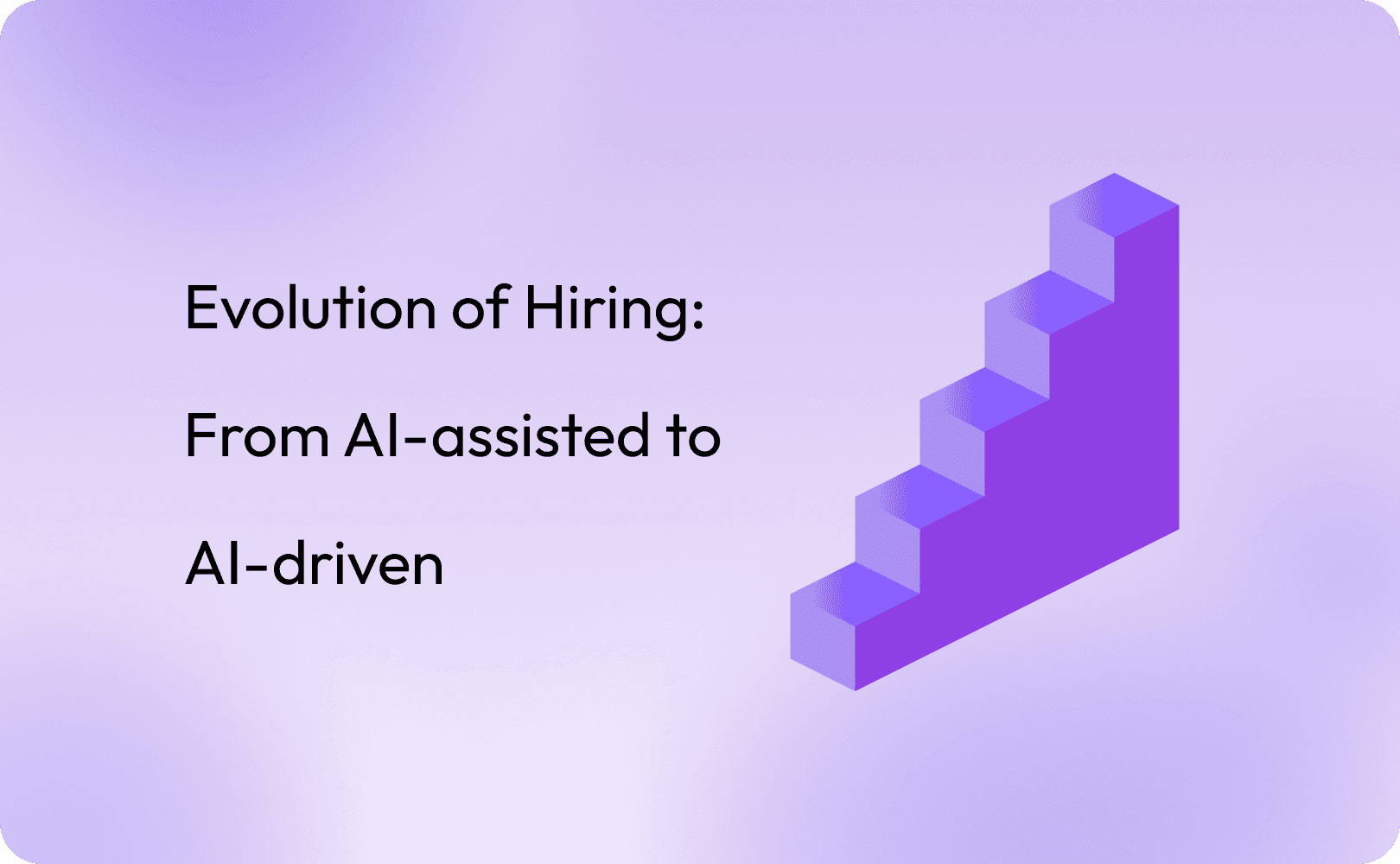
Early 2000s: Manual hiring
Hiring was once entirely manual. Recruiters sourced candidates, reviewed resumes, scheduled interviews, and made decisions themselves. When you're hiring for five positions, this works beautifully. You can give each candidate real attention. You remember their stories. You spot potential that doesn't fit neatly into bullet points.
But scale this to 500 applications? The cracks start showing fast. Human attention fragments. Consistency becomes a myth you tell yourself during standups. What worked at a small scale transforms into a bottleneck that chokes growth. Resume screening became slow, exhausting, and increasingly error-prone. The best recruiters burned out. The rest just started skimming resumes like they were skimming terms and conditions (we all know how that goes).
2010-2020: ATS improved structure, not judgment
Remember when Applicant Tracking Systems arrived and everyone thought hiring was finally solved? They stored resumes in databases instead of filing cabinets. They managed workflows. They tracked applicants through pipelines. Finally, the chaos had structure.
Yet here's what didn't improve: the actual decisions. ATS platforms were organizational tools, not intelligence tools. The keyword filters that were supposed to save time? They created a new game entirely. A brilliant engineer gets auto-rejected because they wrote "JavaScript development" instead of "JavaScript developer." Meanwhile, candidates who'd mastered the art of keyword stuffing sailed through initial screens despite mediocre skills.
Strong candidates were rejected for missing terms, while resume optimization became more important than actual fit. The incentives had flipped completely. Candidates started optimizing for robots instead of humans, which is ironic considering humans were still making the final calls anyway. And recruiters? Still drowning in volume, just in a more organized way. These hiring mistakes plagued the industry for years.
2021 - 2023: AI-assisted hiring
Then machine learning entered the scene like an eager intern on day one. AI could parse resumes, extract skills, and match candidates faster than any human. The efficiency gains were real. Recruiters could suddenly process 500 profiles in the time it used to take to review 50.
Still, these systems only assisted. They were calculators when hiring needed chess partners. They didn't change how hiring decisions were made. Humans continued to drive screening and shortlisting, which meant decision quality did not scale with volume. When applications doubled, quality still suffered. You could move faster, sure, but making better decisions? That part stayed frustratingly hard.
2023-2025: AI Automation without learning
As tools evolved, automation expanded into recommendations, outreach, and scheduling. Some systems started looking sophisticated, almost agent-like. Vendors threw around terms like "intelligent automation" at every conference. Peek under the hood though, and you'd find the same old architecture: static rules, models trained once and frozen in time.
Most relied on one-time models that couldn't adapt. They required frequent tuning and rarely learned from outcomes. Every new role type meant someone had to manually adjust the rules. Every market shift needed human intervention. Hiring remained fragmented and heavily dependent on manual oversight. It was automation theater, not actual intelligence.
2026 and onwards: The Shift towards Agentic Hiring
Something fundamental is shifting right now. In 2026, hiring is moving beyond assistance toward AI-driven recruitment systems. These systems use autonomous agents that learn continuously from recruiter decisions. Every shortlist teaches the system what matters. Every rejection refines its understanding. Every successful hire becomes training data that compounds.
Over time, the system adapts to how recruiters actually evaluate candidates, rather than relying on predefined rules. It's not following a script anymore. It's learning your judgment. Think of it like the difference between a GPS that only knows roads from 2020 versus one that learns which routes you prefer and updates in real time based on current conditions.
This changes hiring fundamentally. Decision quality improves with scale instead of declining. The recruiter who used to spend 70% of their time screening now spends 70% on interviews and candidate engagement. The human work that actually matters. Hiring becomes a system that compounds with use, getting sharper with every decision.
Here's the key difference: AI-driven hiring does not remove humans from the loop. Recruiters supervise outcomes, intervene when needed, and guide the system with feedback. If you can't see why the AI made a decision, you can't trust it. If you can't override it, you don't control it. Transparency, auditability, and control are essential for trust and fairness. The goal is not replacement, but leverage. It's about giving great recruiters superpowers, not replacing them with algorithms.
Why this evolution is inevitable
The uncomfortable truth nobody wants to say out loud: applicant volume will not decrease, and recruiter capacity will not scale endlessly. You can't just keep hiring more recruiters to handle growth. That doesn't scale economically, and it doesn't scale operationally.
Static tools cannot adapt to growing complexity. Systems that learn will outperform those that do not. This isn't a prediction, it's basic math. When one system gets smarter with every hire and another stays frozen in its initial programming, the outcome is inevitable.
Platforms built for continuous learning, such as Kodiva, reflect this shift. They treat hiring as an adaptive system rather than a collection of disconnected tools. Every interaction makes the system more aligned with how you actually hire. Every decision improves the next one.
Agentic hiring is not a trend. It's not a buzzword that'll fade when the next shiny thing arrives. It is the next logical step in how organizations hire at scale. The question isn't whether this transformation is coming. It's whether you'll adopt it while you have a competitive advantage, or scramble to catch up after everyone else already has.