|
4
min read
|
Varun Aggarwal
Hiring today looks deceptively simple from the outside. Post a job, wait for applications, review some resumes, schedule interviews. Done, right?
Not even close.
The hardest part of hiring sits quietly in the middle, invisible to everyone except the people doing it: shortlisting.
It's where most hiring decisions are effectively made, long before a single interview happens. It also happens under brutal pressure, with limited time, incomplete information, and far more candidates than any recruiter can reasonably evaluate one by one. And here's the kicker: mess up shortlisting, and everything downstream falls apart.
Shortlisting is the real bottleneck
Shortlisting determines which candidates move forward and which never get seen. It takes the most time, requires the most judgment, and shapes the quality of the entire hiring funnel. Get it wrong and you're stuck with wasted interviews, longer time to fill, and the crushing realization that your best candidate got filtered out in round one.
Despite its importance, shortlisting is still largely manual. Recruiters scan hundreds of profiles and make dozens of judgment calls per role. As volume grows, consistency drops. Fatigue sets in. Good candidates slip through the cracks, not because they're unqualified, but because human attention has hard limits. Even the best recruiters can't maintain sharp judgment on candidate 247 of the day.
Why existing tools fall short
Applicant tracking systems help with data and workflow, but they don't improve judgment. They're filing cabinets, not thinking partners. Keyword filters and rigid rules reject flexible profiles with ruthless efficiency (and zero nuance). That career switcher with amazing transferable skills? Gone. The candidate who uses slightly different terminology? Rejected before a human even sees them.
Basic AI speeds up clerical tasks, but it remains assistive. These systems don't learn from how your team actually decides. Speed increases but hiring quality doesn't improve. You're just making the same mistakes faster, which is honestly impressive in the worst possible way.
Two failure modes keep repeating: False negatives filter out good candidates because resumes don't match exact templates. The system wants "5 years Python experience" and auto-rejects someone with 4.5 years who's clearly exceptional. Brittle rules fail to adapt to role nuances or subtle signals that experienced recruiters value. That gut feeling about a candidate's trajectory? The system can't see it.
What a hiring Copilot actually is
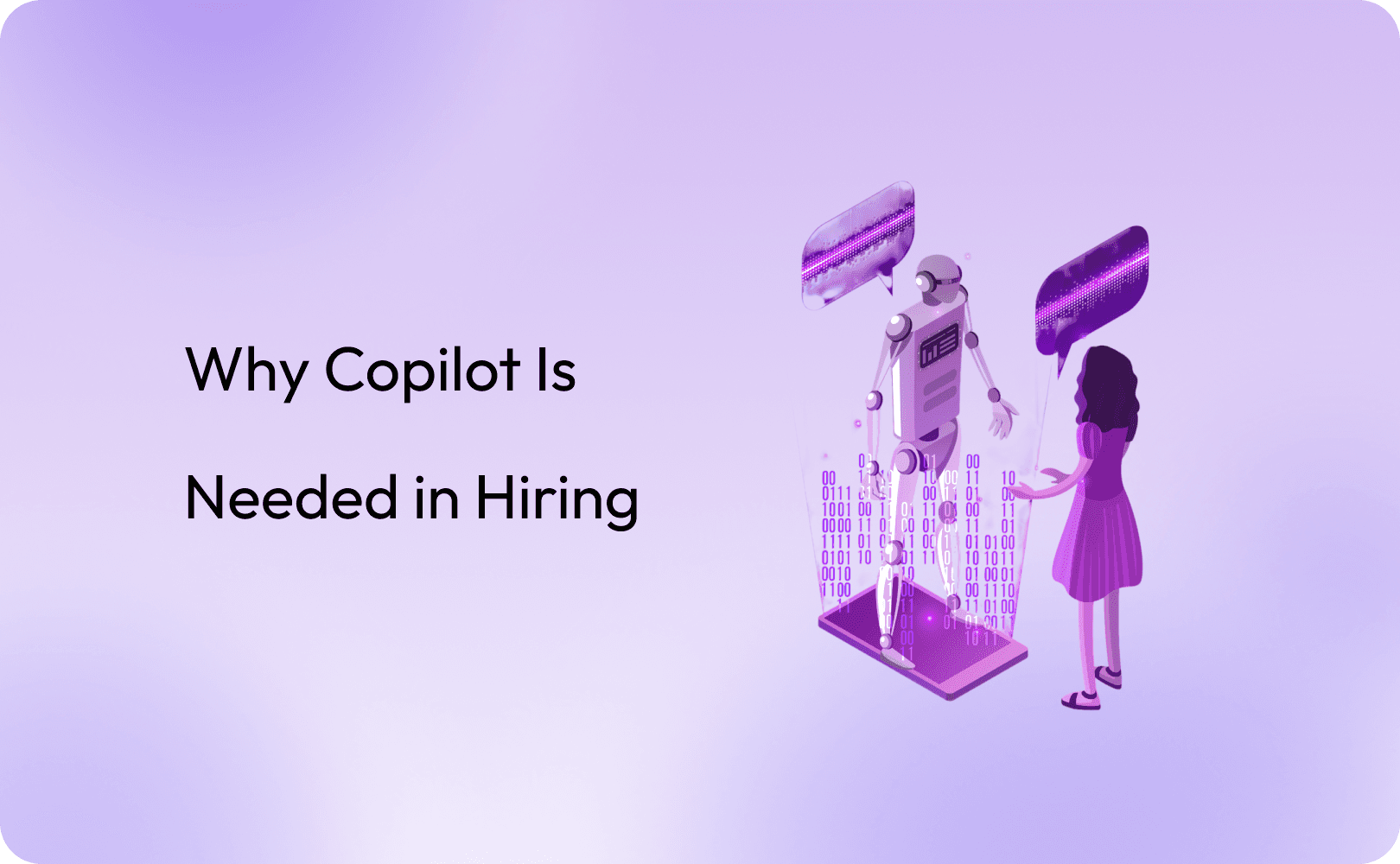
A Copilot is not another filter or faster resume parser (we've got enough of those, thanks). It's a decision assistant that learns from your team. Think of it like having a colleague who gets better at understanding your judgment with every hire.
It observes which candidates recruiters shortlist, which ones are rejected, and which interviews turn into offers. Over time, it aligns to your hiring team's implicit preferences and trade-offs. Instead of dumping 500 unranked profiles on your desk, it proposes ranked shortlists with actual reasoning. It explains why candidate A ranks higher than candidate B.
What a Copilot does:
Learns from recruiter actions and interview outcomes continuously
Proposes ranked and explainable shortlists (not just filtered lists)
Allows easy override, annotation, and correction by recruiters (because humans stay in control)
What changes with a Copilot
Adopting a Copilot changes where time gets spent. Recruiters spend less time on repetitive screening and more time on interviews, candidate engagement, and strategy. You know, the work that actually requires human judgment and relationship building.
Expect fewer missed candidates and more consistent shortlists across roles. Your hiring quality becomes less dependent on whether the recruiter reviewing applications had their coffee that morning. The metrics that matter improve: higher conversion from shortlist to interview, reduced time to first interview, and lower recruiter hours per hire.
Beyond speed, a Copilot reduces cognitive load. Screening hundreds of profiles is mentally draining. When a Copilot handles routine judgment work, recruiters make better decisions because they're less exhausted. Turns out, humans are pretty good at nuanced decisions when they're not burned out from making 300 micro-decisions first.
The bottom line
A Copilot is not a replacement for recruiters. Anyone telling you AI will fully automate hiring is selling something. What it is is a way to multiply expertise. By learning from how your team actually hires, it amplifies judgment, reduces noise, and makes hiring more predictable.
Platforms designed around continuous learning, like Kodiva, turn shortlisting into a capability that improves with use rather than a repetitive task that burns people out. Your hiring quality finally scales with your hiring volume instead of degrading under it.